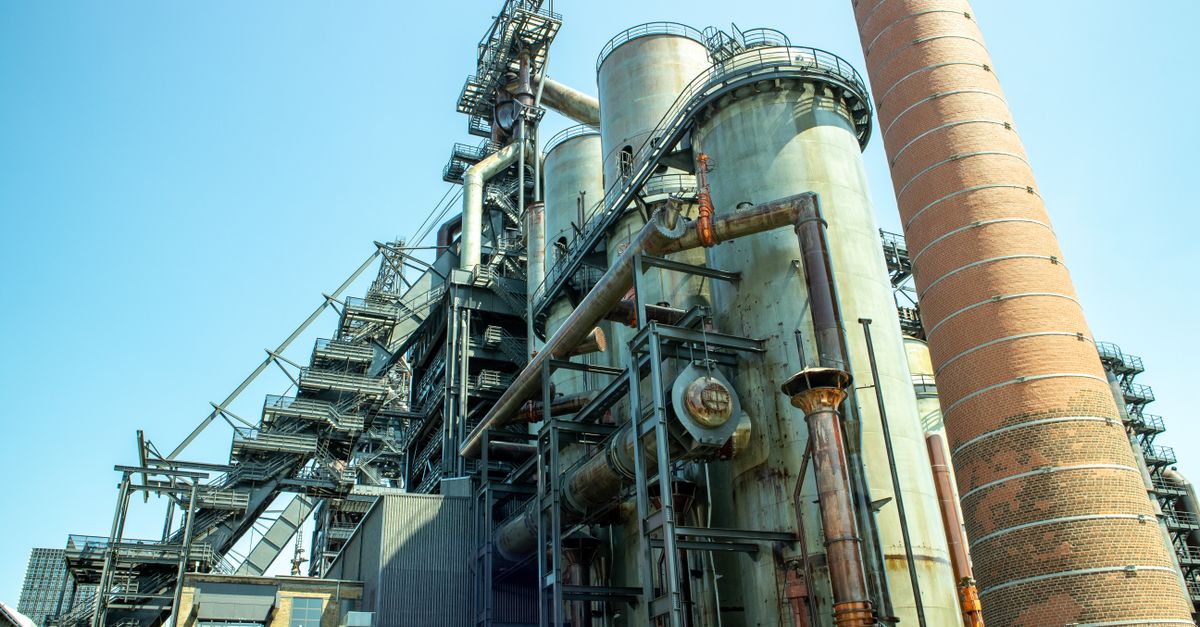





Hard-to-abate industries such as cement, steel, chemicals, refining, and heavy transport account for a large share of global industrial emissions. These sectors rely on high-temperature heat, chemical reactions, or fossil-based feedstocks that are difficult to replace with electrification alone. As net-zero targets tighten, carbon capture has emerged as a central tool to manage emissions that cannot be eliminated through efficiency or fuel switching.
Recent years have seen a shift from pilot-scale experimentation toward commercially oriented deployment. The trends below highlight how carbon capture is evolving to meet industrial, economic, and regulatory realities.
From Single-Plant Projects to Industrial Hubs
One of the primary movements is the shift toward shared carbon capture infrastructure. Rather than individual plants constructing isolated systems for capture, transport, and storage, several emitters are frequently linked via regional hubs.
- Industrial clusters such as ports, steel corridors, and chemical hubs are pooling CO2 streams.
- Shared pipelines and storage sites reduce unit costs and investment risk.
- Examples include large-scale cluster developments in Northern Europe, the US Gulf Coast, and parts of East Asia.
This hub-based model allows smaller or medium-sized facilities, such as cement kilns, to participate in carbon capture without bearing the full cost burden alone.
Enhanced Data Collection Methods Designed for Unique Industries
Another major trend is the sector-specific optimization of capture technologies. Early carbon capture relied heavily on generic post-combustion solvent systems. Today, technologies are increasingly customized.
- Cement plants are deploying oxy-fuel and calcium looping systems that align with process emissions.
- Steelmakers are integrating capture with blast furnaces and direct reduced iron processes.
- Chemical and hydrogen producers are applying pre-combustion capture with high CO2 concentrations, lowering energy penalties.
These tailored approaches can reduce capture costs by 20 to 40 percent compared to first-generation designs, according to industry assessments.
Cost Reduction Through Scale and Learning Effects
Cost remains a critical hurdle, yet trends indicate steady progress. As additional projects move into construction and operation, learning-by-doing is driving down both capital and operational expenditures.
- Customized engineering is gradually giving way to standardized capture modules.
- Overall efficiency is enhanced by bigger absorbers, compressors, and heat integration systems.
- Solvent losses and downtime are minimized through automated controls and digital monitoring.
For example, capture costs in some industrial applications have fallen from well above 100 US dollars per ton of CO2 a decade ago to ranges closer to 50–80 dollars per ton in newer projects.
Integration with Carbon Utilization and Low-Carbon Products
A growing trend is the coupling of carbon capture with carbon utilization pathways, especially where permanent storage options are limited or politically sensitive.
- Captured CO2 is used in synthetic fuels, chemicals, and building materials.
- Cement and concrete producers are mineralizing CO2 into aggregates and cured products.
- Steel and chemical firms are marketing low-carbon materials with verified captured emissions.
While utilization alone cannot absorb all captured CO2, it creates early revenue streams and helps justify investment in capture equipment.
Policy-Driven Acceleration and Market Signals
Policy frameworks are becoming more explicit in supporting carbon capture for hard-to-abate sectors. This represents a shift from viewing capture as a last resort to treating it as a necessary complement to electrification and renewables.
Key policy trends include:
- Carbon pricing systems that reward captured and stored emissions.
- Tax credits and contracts for difference that guarantee CO2 abatement value.
- Public funding for transport and storage infrastructure.
In territories with robust regulatory signals, capital allocation decisions are moving faster. Businesses are progressively synchronizing capture initiatives with mandatory compliance frameworks instead of relying solely on voluntary environmental targets.
Greater Focus on CO2 Transport and Storage Security
As capture volumes grow, attention is shifting downstream to transport and long-term storage. This is a critical trend for hard-to-abate industries, which generate continuous, high-volume CO2 streams.
- Onshore and offshore geological storage sites are being appraised at industrial scale.
- Shipping of liquefied CO2 is gaining traction where pipelines are not feasible.
- Regulatory frameworks for monitoring and liability are becoming clearer.
This focus reduces uncertainty for industrial emitters, who need confidence that captured CO2 can be handled safely and permanently over decades.
Integration with Hydrogen and Electrification Pathways
Carbon capture is increasingly deployed alongside low-carbon hydrogen and partial electrification strategies rather than in isolation.
- Blue hydrogen initiatives pair natural gas reforming alongside high capture percentages.
- Hybrid facilities utilize electrified heat whenever feasible while capturing leftover emissions.
- Industrial pathways merge capture efficiency, fuel switching, and material recycling.
This integrated approach mirrors a more practical transition route for sectors where complete electrification remains unfeasible from a technical or financial standpoint in the immediate future.
Rising Corporate and Supply Chain Pressure
Beyond regulatory mandates, market forces are driving adoption. Major purchasers of steel, cement, and chemicals are establishing emissions limits for their suppliers.
- Car manufacturers and builders are requesting low-carbon supplies.
- Reporting frameworks are boosting transparency regarding manufacturing emissions.
- Items made from captured carbon are commanding higher prices across specific sectors.
This trend turns carbon capture from a compliance cost into a competitive differentiator for early movers.
An Evolving Part in Industrial Decarbonization
Carbon capture for hard-to-abate sectors is no longer viewed as an experimental or short-term fix. Instead, it is emerging as a core pillar of industrial transformation, driven by infrastructure sharing, technological specialization, regulatory alignment, and market demand. As these forces converge, capturing emissions is shifting from a defensive tactic into a strategic investment that fundamentally transforms how heavy industry functions within a carbon-constrained economy.