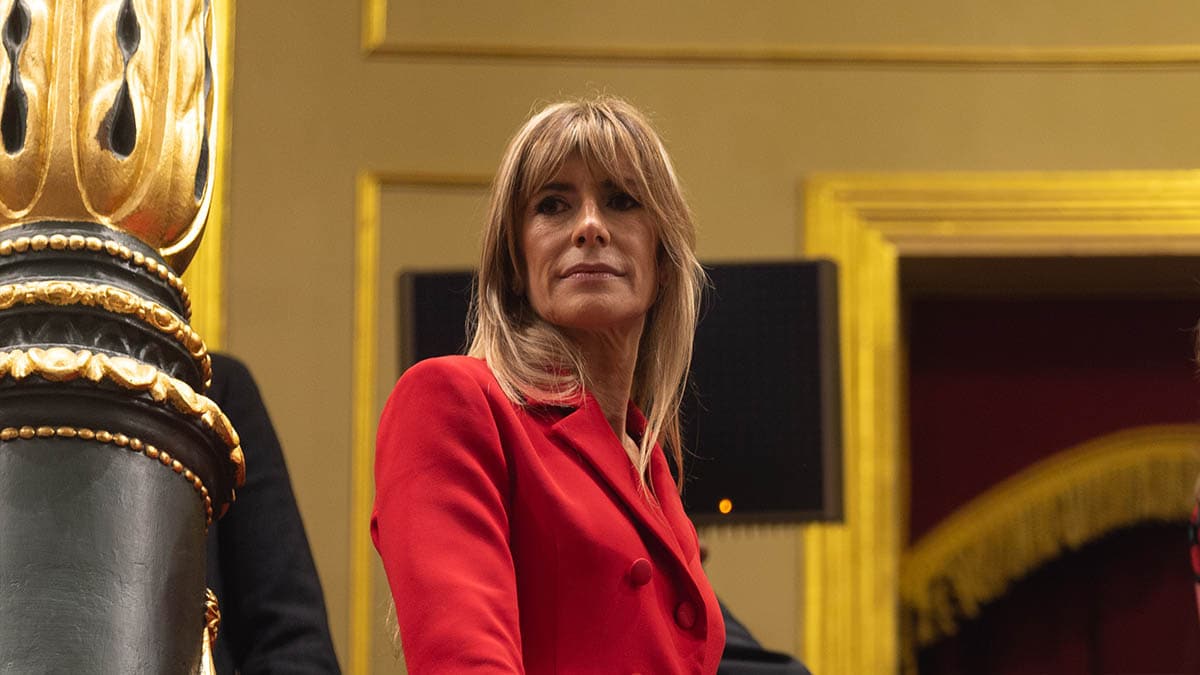
El interés jurídico en Begoña Gómez, esposa del Primer Ministro español Pedro Sánchez, ha aumentado. Ella está actualmente bajo investigación formal por presunto tráfico de influencias, corrupción empresarial, malversación de fondos públicos y apropiación indebida. Por primera vez en la historia democrática de España, la pareja de un Primer Ministro en funciones enfrenta procesos judiciales activos mientras su cónyuge sigue en el cargo.
The University Position Central to the Matter
The situation concerns Gómez’s position as head of the Chair of Social Competitive Transformation at the Complutense University of Madrid. Investigators claim that Gómez purportedly utilized her academic role to endorse particular firms in government procurement procedures, taking advantage of her closeness to the executive power.
These companies reportedly received public contracts under advantageous conditions after participating in events or projects organized by the Chair or supported by Gómez herself. It is this intertwining of institutional, academic, and private interests that forms the basis of the charges of influence peddling and corruption.
Accusations of Embezzlement and Misuse
The inquiry continues. Officials are looking into the possibility that Gómez utilized government assets for illegitimate activities, such as questionable employment methods and the personal attribution of software created with government resources. These deeds might amount to fraud and misuse, broadening the legal framework of the investigation.
A major worry is that a portion of the involved funding might have come from European Union grants, leading the European Public Prosecutor’s Office to ask for official paperwork regarding the issue.
Institutional Silence and Political Containment
The official communication from the Prime Minister’s office has been restricted to standard appeals for upholding judicial independence. Pedro Sánchez has refrained from making specific remarks on the issue, while the PSOE has kept a neutral stance publicly—neither supporting Gómez nor criticizing her conduct. This lack of response has been viewed by numerous individuals as an effort to manage a controversy with significant ethical consequences.
Is it an Unrelated Event or a Sign of a Trend?
The investigation into Begoña Gómez does not stand alone. It coincides with other active cases involving Sánchez’s inner circle, including his brother David Sánchez and senior PSOE figures like Santos Cerdán. The simultaneous emergence of these scandals suggests more than coincidence—it raises concerns about a broader network where public and private interests may have been systematically blurred for personal gain.
The judicial inquiry into Begoña Gómez presents a profound challenge to the government and to the integrity of public institutions. This is not just a question of individual criminal liability—it is about whether political, academic, and economic structures have been co-opted to create influence networks shielded from oversight.
As the inquiry progresses, the trust in the government keeps diminishing. The commitment to democratic revival that once characterized Pedro Sánchez’s leadership is currently being challenged by claims of favoritism, silence, and lack of transparency at the top echelons of authority.